
In AssetOps, tasks are managed at the portfolio level. You define reusable work in Templates, then optionally bundle templates into Task groups for schedules that require a full checklist. Open Tasks from the portfolio sidebar. Use the secondary navigation to switch between Templates and Task groups.

Task templates

A task template is a reusable definition for work performed during preventive maintenance or inspections. Templates include instructions, estimated duration, applicable asset types, and optional attachments. When you schedule work at the building level, you assign templates so generated work orders include consistent tasks.

View the templates list

Select Templates under Tasks to open the task templates list.
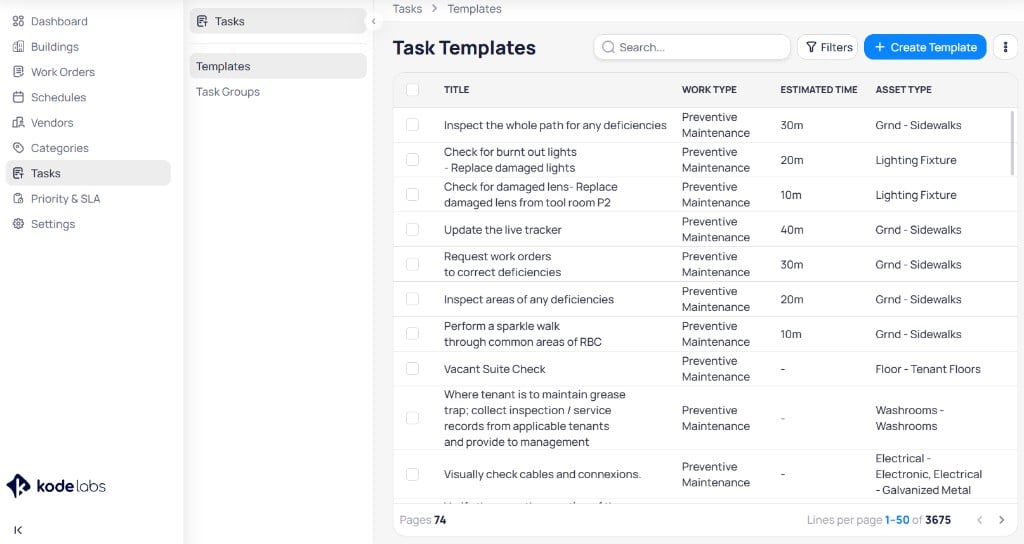
AssetOps Task Templates list with Title, Work Type, Estimated Time, and Asset Type columns, search, Filters, and Create Template button

The Task Templates page lists templates with work type, estimated time, and asset type

Use Search and Filters to find templates. Select row checkboxes for bulk edit. Pagination helps you navigate large libraries.

Template fields

When you create or edit a template, you configure the following fields.
Field
required
Short name for the task. This text appears in the templates list and on work orders.
Dropdown
required
Maintenance program for the template. Options include Preventive Maintenance and Inspection.
Field
Expected duration in hours and minutes. Helps planners estimate labor on schedules and dashboards.
Field
Detailed instructions for the assignee. Supports rich text formatting such as bold, lists, and links.
Additional fields appear based on work type. See Create templates by work type below.

Create templates by work type

Select + Create Template to open the creation dialog.
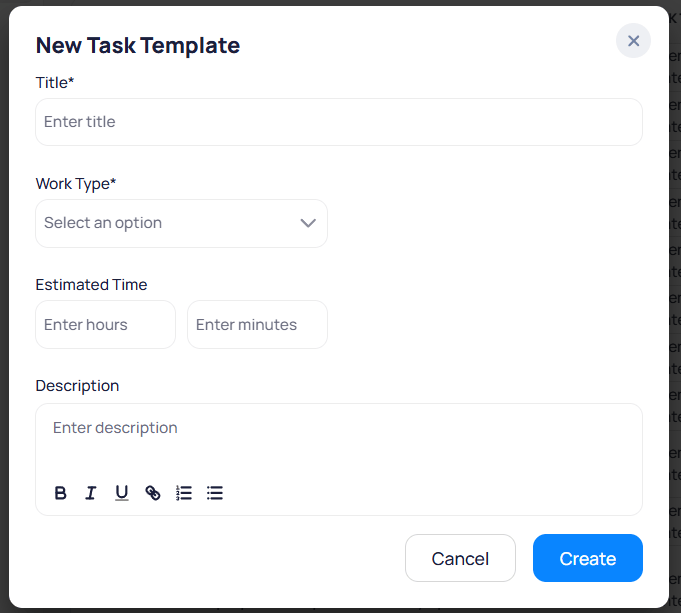
New Task Template modal with Title, Work Type, Estimated Time hours and minutes fields, and rich text Description editor

Enter title, work type, estimated time, and description to create a template

1

Open Templates

Navigate to Tasks and select Templates.
2

Select + Create Template

Select + Create Template.
3

Set work type and asset types

Select Preventive Maintenance as Work type. Choose one or more Asset types the template applies to.
4

Add title, time, and description

Enter Title, Estimated time, and Description.
5

Create

Select Create to save the template.

View and edit a template

Select a template from the list to open its detail page.
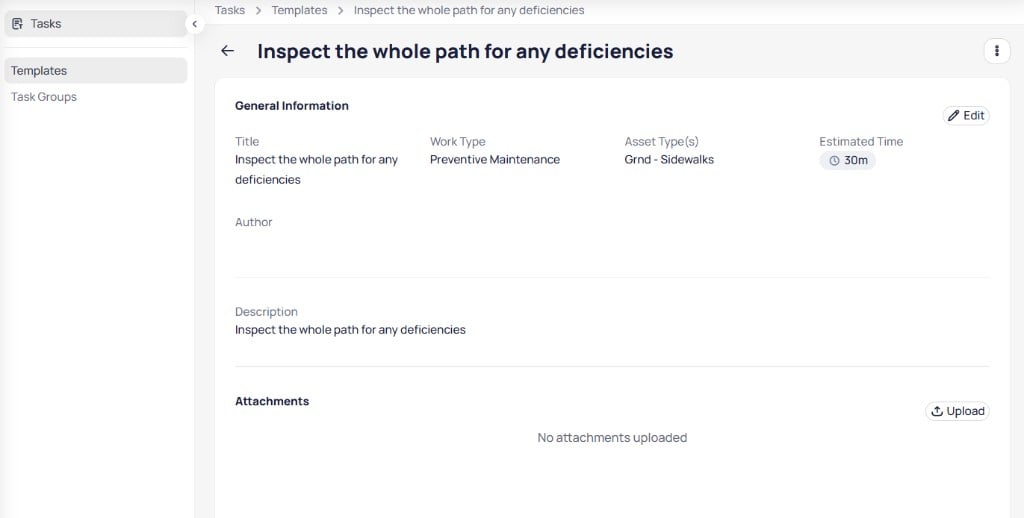
Task template details page with General Information including title, work type, asset types, and estimated time, plus Description and Attachments sections

The template details page shows general information, description, and attachments

General information

Select Edit in the General information section to update these fields.

Description

The Description section shows the full task instructions, including formatted content from the rich text editor.

Attachments

The Attachments section stores reference files such as procedures, diagrams, or forms.
  • Select Upload to add files to the template.
  • Attachments copy to work orders that use the template when your organization configures that behavior.

Other actions

Use the menu in the upper right corner of the page to delete the template.
1

Open a template

From Templates, select the template you want to change.
2

Edit or attach files

Select Edit to update fields, or Upload to add attachments.
3

Save changes

Save your updates. Existing schedules that reference the template use the updated definition for new work orders according to your configuration.

Import, export, and bulk update

Import and export

Open the menu next to + Create Template.
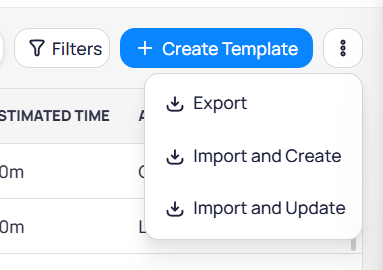
Create Template button with overflow menu showing Export, Import and Create, and Import and Update options

Export, import and create, or import and update templates from the overflow menu

Download starter files:

Bulk edit

Select one or more templates using row checkboxes, then select Edit.
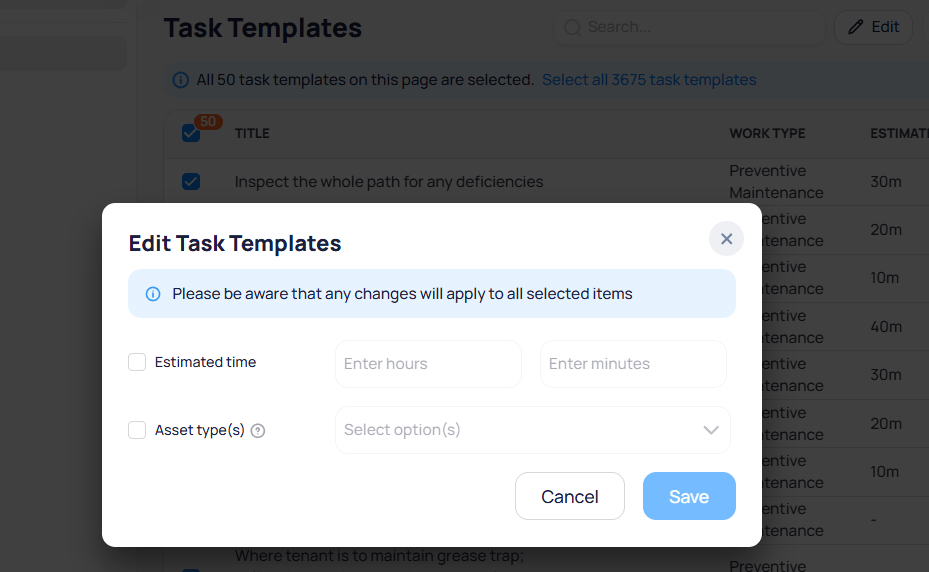
Edit Task Templates modal with checkboxes to update estimated time and asset types for all selected templates on the page

Bulk edit applies estimated time and asset type changes to all selected templates

Changes in bulk edit apply to every selected template that passes validation. Review the selection count before you save.
Enable Estimated time or Asset type(s), enter the new values, and select Save. Bulk updates run as a batch. Failed rows remain available to review and export with failure reasons. A progress popup confirms when processing starts, and the seven-day bulk history records who ran the update and the success and failure counts. You can select all templates on the current page, then use the banner option to extend the selection to every template in the library.

Bulk delete unused templates

Select unused task templates that are not linked to active schedules, then delete them in bulk. Templates that are still used on live schedules are not removed; those rows appear as failures in the batch result and exportable report.

Use templates on schedules

Assign templates when you create building-level schedules: Each generated work order includes the tasks from the templates you selected. Define templates at the portfolio level first, then reference them during schedule configuration.

Task groups

A task group bundles multiple task templates that share a Work type and apply to the same asset types. Use a group when scheduled work always requires the same set of tasks, such as a multi-step inspection or preventive maintenance checklist across several asset types.

View the task groups list

Select Task groups in the Tasks secondary navigation.
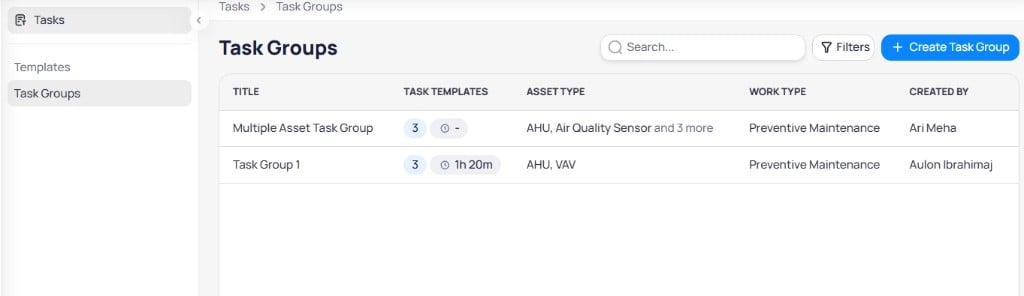
AssetOps Task Groups list with Title, Task Templates count, Asset Type, Work Type, and Created By columns

The Task Groups page lists groups with template count, asset types, and work type

Use Search and Filters to find groups. Select + Create Task Group to add a new group.

Task group fields

During creation and on the details page, a task group includes:
Field
required
Display name for the task group.
Dropdown
required
Maintenance program for all templates in the group. Templates must align with this work type.
Dropdown
Asset types the group applies to. Derived from the selected templates and general info step.
Dropdown
Shown for inspection groups. Values include Asset, Area, or General.

Create a task group

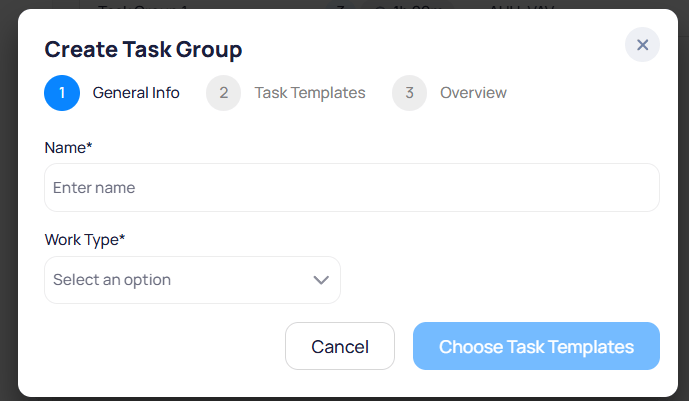
Creating a task group uses a three-step wizard: General info, Task templates, and Overview.

Step 1: General info

Create Task Group modal step one General Info with Name and Work Type fields

Enter the task group name and work type in the first step

1

Select + Create Task Group

On the Task groups page, select + Create Task Group.
2

Enter name and work type

Enter Name and Work type. For inspection groups, set Inspection type when prompted.
3

Continue

Select Choose Task Templates to go to step 2.

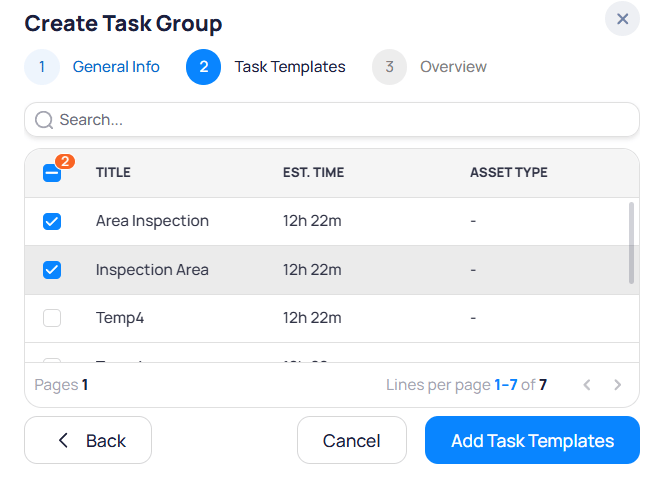
Step 2: Task templates

Create Task Group modal step two Task Templates with search field, template list with Title and Est Time columns, and two templates selected

Search and select task templates to include in the group

Search for templates, then select checkboxes for each template to include. The header checkbox shows how many templates are selected. Only templates that match the group’s work type appear. Select Add Task Templates to continue. Use Back to change general info.

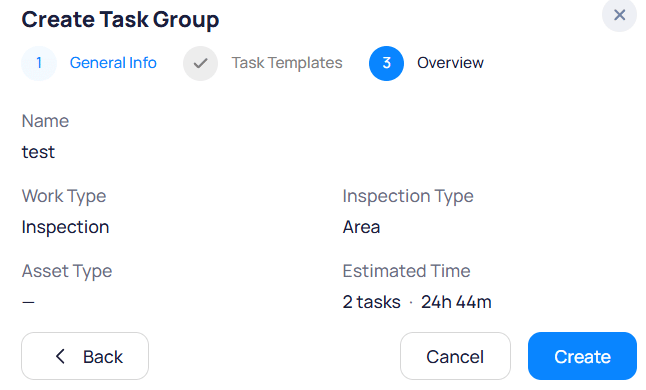
Step 3: Overview

Create Task Group modal step three Overview showing Name, Work Type, Inspection Type, Asset Type, and Estimated Time summary with Create button

Review task group details before you create the group

The Overview step summarizes:
  • Name and Work type
  • Inspection type — For inspection groups
  • Asset type — Asset types linked to the group
  • Estimated time — Template count and combined duration (for example, 2 tasks · 24h 44m)
Select Create to save the group, or Back to change earlier steps.

View and manage a task group

Select a group from the list to open its details page.
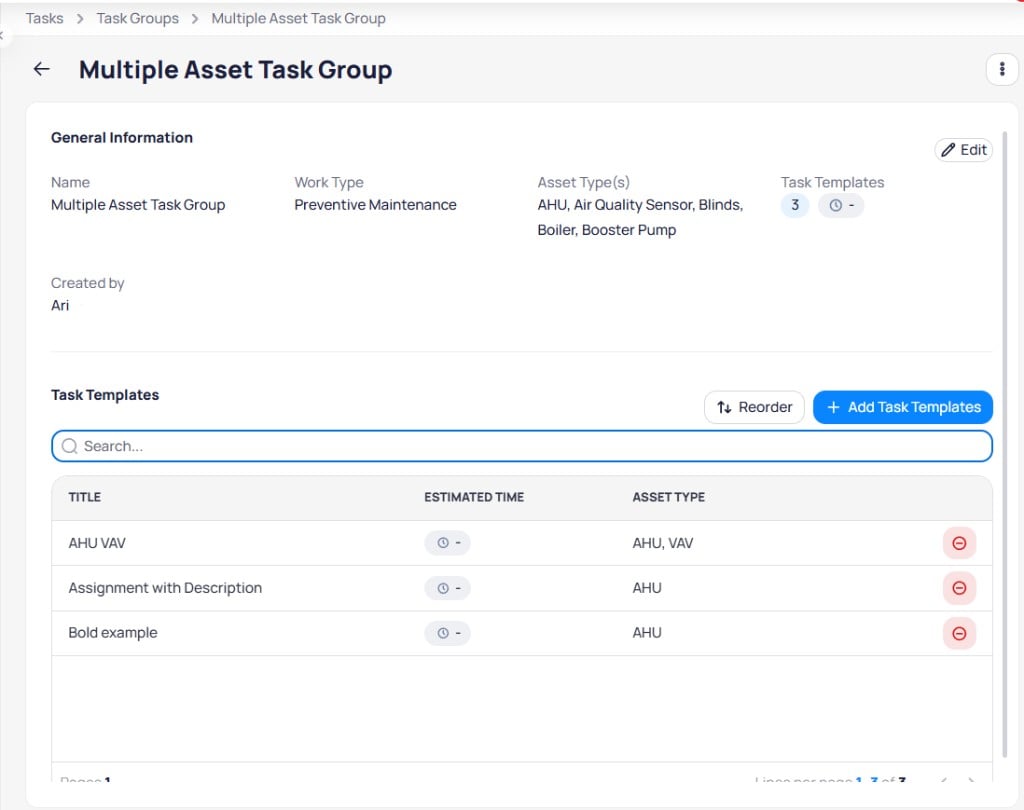
Multiple Asset Task Group details with General Information section and Task Templates table with Reorder and Add Task Templates actions

The task group details page shows general information and linked task templates

General information

Review Name, Work type, Asset type(s), Task templates count, total estimated time, and Created by. Select Edit to update the group name or work type.

Templates in the group

The Task templates table lists each template in execution order. Use search within the section to find templates in large groups.
1

Open a task group

From Task groups, select the group you want to manage.
2

Add or reorder templates

Select + Add Task Templates to attach templates, or Reorder to change task sequence.
3

Save changes

Confirm additions or reordering. The group’s total estimated time updates based on included templates.

Edit or delete a task group

  • Select Edit on the details page to change group metadata.
  • Open the menu in the upper right corner to delete the group.
Deleting a task group does not delete the task templates it references. Schedules that already use the group may require updated task assignments.

Use task groups on schedules

When you create a schedule, you can assign a task group instead of selecting individual templates. The schedule applies every template in the group to generated work orders. Define templates first, bundle them into groups when needed, then reference the group during schedule setup at the building level.

Schedules

Assign templates and task groups when you schedule recurring work.

Categories

Classify work orders that include tasks from templates and groups.

Task fields

Look up template and task group field definitions.
Last modified on August 18, 2026